
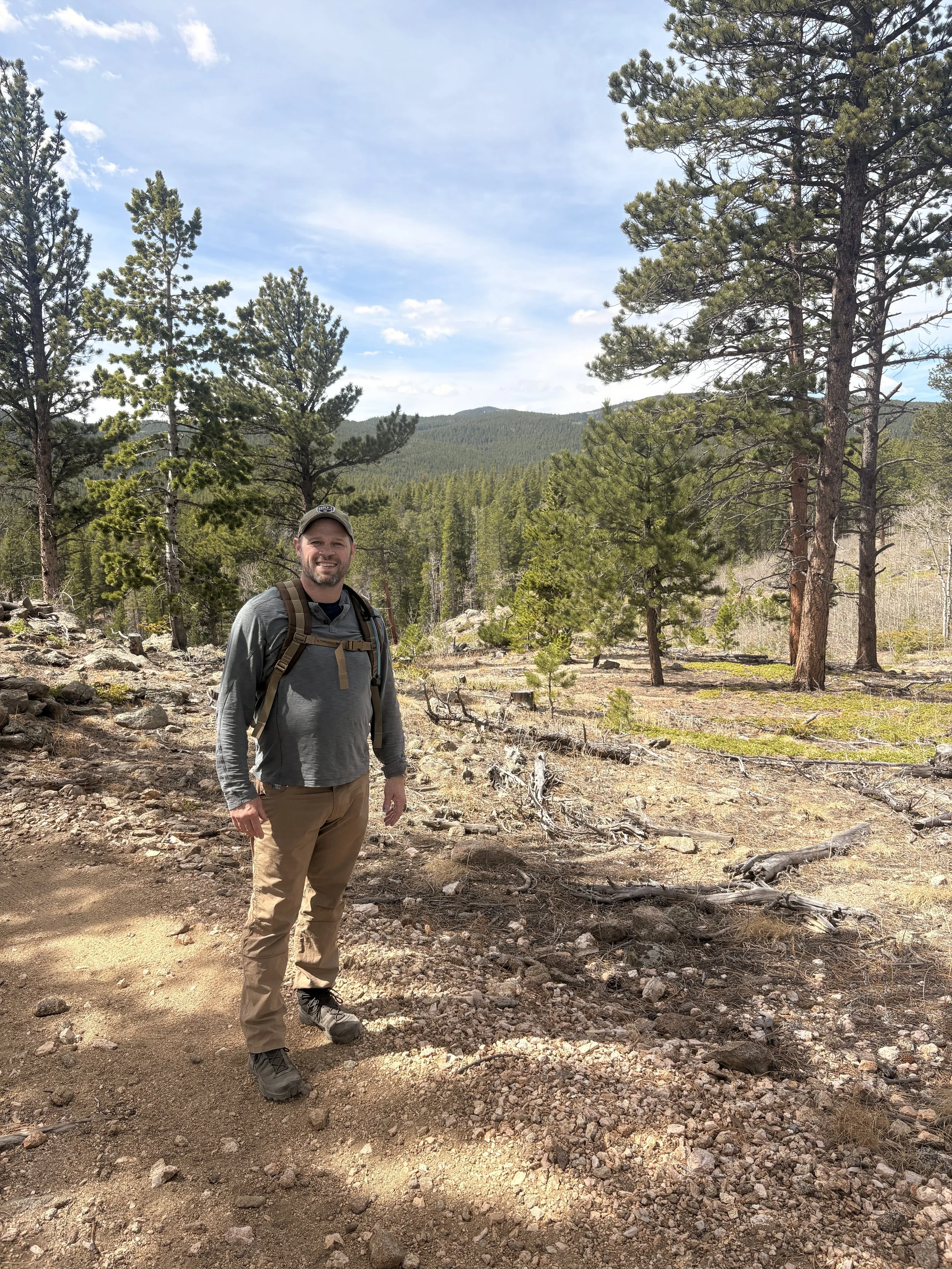
Summer Training Strategy
Summer doesn't have to undo your fitness. With the right mindset and a few simple tools, you can stay strong, capable, and ready for whatever the season throws at you, even if you spend half of it in airports or on someone else's schedule.
June hits and something shifts.
The schedule loosens. The family's in the car. You're staying at a hotel that has a fitness room with one broken treadmill and a set of dumbbells that top out at 25 pounds. Your normal routine is 1,200 miles away.
This is the moment that separates people who maintain fitness across the whole year from people who restart every September.
I've been coaching long enough to recognize the pattern. It's not a motivation problem. It's a planning problem, and a mindset problem. Most people treat summer as a break from their training instead of a different context for it.
Here's how to flip that.
THE MINDSET SHIFT THAT CHANGES EVERYTHING
The goal in summer isn't to peak. It isn't to maintain every metric you've built. The goal is to stay in the game, to keep showing up in some form, at some frequency, so that when September arrives you're not starting over.
The Primal Movement Framework I build every program around doesn't require a specific gym or a full hour. It requires attention to the patterns that matter: squat, hinge, push, pull, carry, lunge, rotate. Those patterns can be trained almost anywhere, at almost any intensity, with almost any equipment, including none.
"You don't lose fitness in a week. You lose it in the decision to stop showing up."
When I'm traveling, the bar for "a good session" drops, intentionally. Not because I don't care about training, but because I do. A 20-minute hotel room circuit that hits the foundational patterns is worth infinitely more than a skipped workout because I couldn't replicate what I do at The Retreat.
WHAT TO PRIORITIZE WHEN EQUIPMENT IS LIMITED
Not all movement patterns are equal when you're working with limited tools. Here's how I rank them by travel-friendliness and return on time invested:
Carries and loaded locomotion.If you can find a backpack and fill it with books or water bottles, you've got a carry. Farmer's carry variations build grip, core stability, and conditioning simultaneously, and they transfer directly to hiking, hauling luggage, and any activity that demands sustained physical effort.
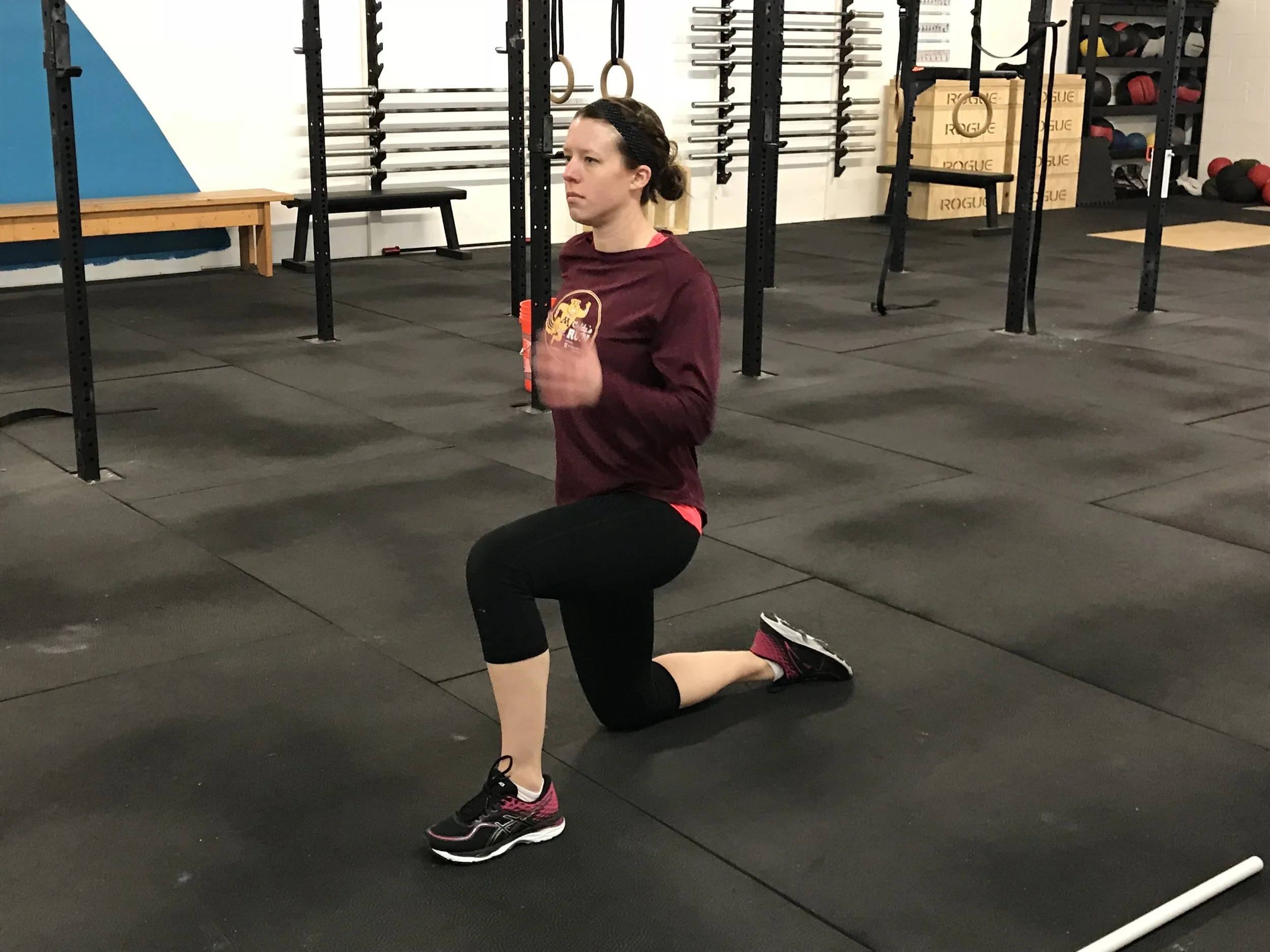
Single-leg work.Lunges, split squats, and step-ups require zero equipment and expose the imbalances that accumulate when we default to bilateral work. This is prime territory for travel training.
Hinge patterns.Single-leg RDLs with no weight, hip airplanes, and slow eccentric deadlifts using whatever's available (a heavy suitcase works fine) keep the posterior chain engaged when you can't get to a bar.
Pushing with variation.Push-up variations, elevated, deficit, slow eccentric, pause at the bottom, can be pushed to surprising intensity without any equipment. Don't underestimate them.
Rotation.The most neglected pattern in any gym, let alone while traveling. Band pull-aparts, suitcase rotations, or simply a loaded backpack wood chop keeps the transverse plane moving.
A NO-EXCUSE HOTEL ROOM CIRCUIT
This takes 20-25 minutes. All you need is a small amount of floor space and a backpack loaded with whatever weight you have available.
SUMMER TRAVEL CIRCUIT
3 ROUNDS
Slow Eccentric Push-Ups 8 reps, 4 seconds down
Reverse Lunge to Balance 10 reps each leg
Single-Leg RDL (bodyweight) 8 reps each side
Loaded Backpack Carry 60 seconds, change hands at 30
Hip Hinge Hold 30-second isometric at the bottom
Rotational Reach 10 reps each side, slow and deliberate
Rest 90 seconds between rounds. Add a fourth round if you have time and energy. Log it. Move on with your day.
ADVENTURE TRAVEL: WHEN THE TRIP IS THE TRAINING
Summer travel doesn't have to mean training in spite of your trip. The best version of summer fitness is when your travel is the proving ground, when you've built a body that actually performs in the environments you're moving through.
This is the whole premise behind the adventure travel programs I run. The Colorado Front Range trip in September is a direct example: 10 weeks of targeted programming followed by five days of mountain terrain that your body is ready for. Trail hiking, uneven surfaces, multi-day sustained effort, altitude. That's the test. The training is what makes it possible to say yes.
If you're heading somewhere with trails, elevation, or any kind of physical demand this summer, the time to prepare is now. Your knees, ankles, and hips will Thank you! you, and so will the person you're hiking with who assumed it was going to be a casual walk.
RESOURCES TO KEEP YOU MOVING THIS SUMMER
Here's where to go on the site depending on where you are and what you need:
Initial Movement Screen
LEARN MORE
ADVENTURE TRAVEL
Colorado Front Range Trip Sept 2026
10 weeks of prep + 5 days in Golden, CO. Hike, zip-line, hot springs. Limited to 10 spots. Final confirmation June 15.
1:1 COACHING
Personal Training Sessions
Build a summer-specific program before you leave and a re-entry plan for when you return. Every session has a reason.
LEARN MORE
FROM THE BLOG
Ankle & Knee Stability for Uneven Terrain
A 15-minute pre-trail circuit for the hikes, beaches, and uneven terrain that summer throws at you.
THE SIMPLE SUMMER TRAINING RULES
Keep the frequency, adjust the volume.Four sessions a week at home might become two on the road. That's fine. The habit of showing up is worth protecting more than the specific workload.
Prioritize the patterns that transfer.Carries, hinges, single-leg work, and pushing variations give you the most real-world return, especially when you're hiking, swimming, or physically active in new environments.
Lower the bar for "a good session", not for effort.A 20-minute circuit done hard is better than a skipped 60-minute session because the conditions weren't ideal. The conditions are never ideal. Show up anyway.
Use summer as a proving ground, not a break.The goal is to be physically ready to say yes to everything the season offers. That requires maintenance, not vacation from movement.
Summer is long. The window to stay strong and capable is longer than most people think. You don't need a perfect setup. You need intention and consistency.
Get out there. Carry something. Move through terrain. Come back stronger than you left.
The Confidence–Competence Loop: How Strength Training Builds Mental Resilience
There's a moment that every lifter knows. You walk up to a bar loaded heavier than you've ever touched. Your palms are sweating. Your inner voice is running through every possible reason to bail. And then you lift it.
Something shifts in that moment — and it doesn't stay in the gym.
That shift has a name. Researchers and psychologists call it the confidence-competence loop: a self-reinforcing cycle where gaining real-world skill builds genuine self-belief, and that self-belief fuels the courage to take on the next challenge. Strength training is one of the most direct ways to step into that loop deliberately.
THE PSYCHOLOGY
Why the gym is a mental laboratory
Albert Bandura's concept of self-efficacy — your belief in your own ability to succeed in a specific situation — is at the heart of this. Bandura found that the most powerful way to build self-efficacy isn't through affirmations or positive thinking. It's through mastery experiences: actually doing hard things and succeeding at them.
The barbell is a mastery experience machine. It gives you a measurable, objective challenge. It doesn't care how your day went. And when you overcome it, the proof lives in your body — not in a spreadsheet or someone else's opinion.
"You can't fake a heavy lift. That's what makes it so powerful — the evidence is irrefutable."
Every rep you complete under load trains your nervous system in more ways than one. You're building motor patterns, yes — but you're also building a mental evidence base. A record of times you showed up, did the hard thing, and came out the other side.
THE LOOP IN ACTION
How competence becomes confidence
Take on ahard challengeBuild realcompetenceExperiencemasteryConfidencegrows
Each cycle of the loop compounds on the last.
The loop works because strength training provides immediate, honest feedback. Your body either moved the weight or it didn't. There's no ambiguity. This clarity is rare in modern life — most of our work and relationships exist in a fog of subjective assessment. The gym cuts through that.
Over weeks and months, something remarkable happens. You stop identifying as someone who struggles with hard things, and start identifying as someone who does hard things. That identity shift is the real prize.
THE SCIENCE
What's actually happening in your brain
↑ BDNF Brain-derived neurotrophic factor rises with resistance training
26% Average reduction in anxiety symptoms from regular lifting
2× Greater self-esteem gains vs. cardio in multiple studies
Strength training floods your body with neurochemicals that directly support mental resilience. Cortisol — your stress hormone — learns to be regulated through the repeated stress-and-recovery cycle of lifting. You're essentially training your nervous system to handle pressure and bounce back from it, over and over.
Beyond chemistry, there's structure. Progressive overload — the foundational principle of getting stronger — is also a framework for how to approach any goal in life. You start where you are. You add a little more. You recover. You repeat. That's not just a training principle; it's a philosophy.
REAL WORLD TRANSFER
The gym trains you for everything else
Here's what no one tells you when you start lifting: the discipline, discomfort tolerance, and delayed gratification you build under the bar transfer directly to every other domain of your life.
The person who can grind through a hard squat session when they're tired and unmotivated develops a psychological muscle that shows up in difficult conversations, demanding workdays, and moments when life gets genuinely hard. You've practiced not quitting — at something measurable, objective, and honest.
"The gym is where you rehearse the person you want to be everywhere else."
This isn't motivational fluff. It's a well-documented psychological phenomenon called cross-domain transfer of self-efficacy. When you prove to yourself that you can do hard things in one area of life, your brain updates its general model of your capability. The evidence compounds.
How to use the loop intentionally
✓ Set goals slightly beyond your comfort zone. The loop only spins when there's genuine challenge. Too easy and there's no mastery. Too hard and you stall out. Find the edge.
✓ Track your progress obsessively. The mental evidence base needs receipts. Log your lifts. Celebrate PRs. Make the proof visible.
✓ Show up on the hard days. Motivation-driven training builds a fair-weather identity. Discipline-driven training builds an unshakeable one. The days you don't want to go matter most.
✓ Notice the transfer. Consciously connect your gym wins to your mindset outside the gym. The loop accelerates when you make it explicit.
FINAL WORD
Strength is just the beginning
People come to strength training for the aesthetics or the performance. They stay because of who they become in the process. The muscle is real, but the mental shift is the transformation that actually changes your life.
The bar/kettlebell/dumbbell/sandbag doesn't care about your doubts. It only cares whether you lift it. And every time you do, the person on the other side of that lift is a little harder to shake — in the gym, and everywhere that matters.
That's the loop. Get in it.
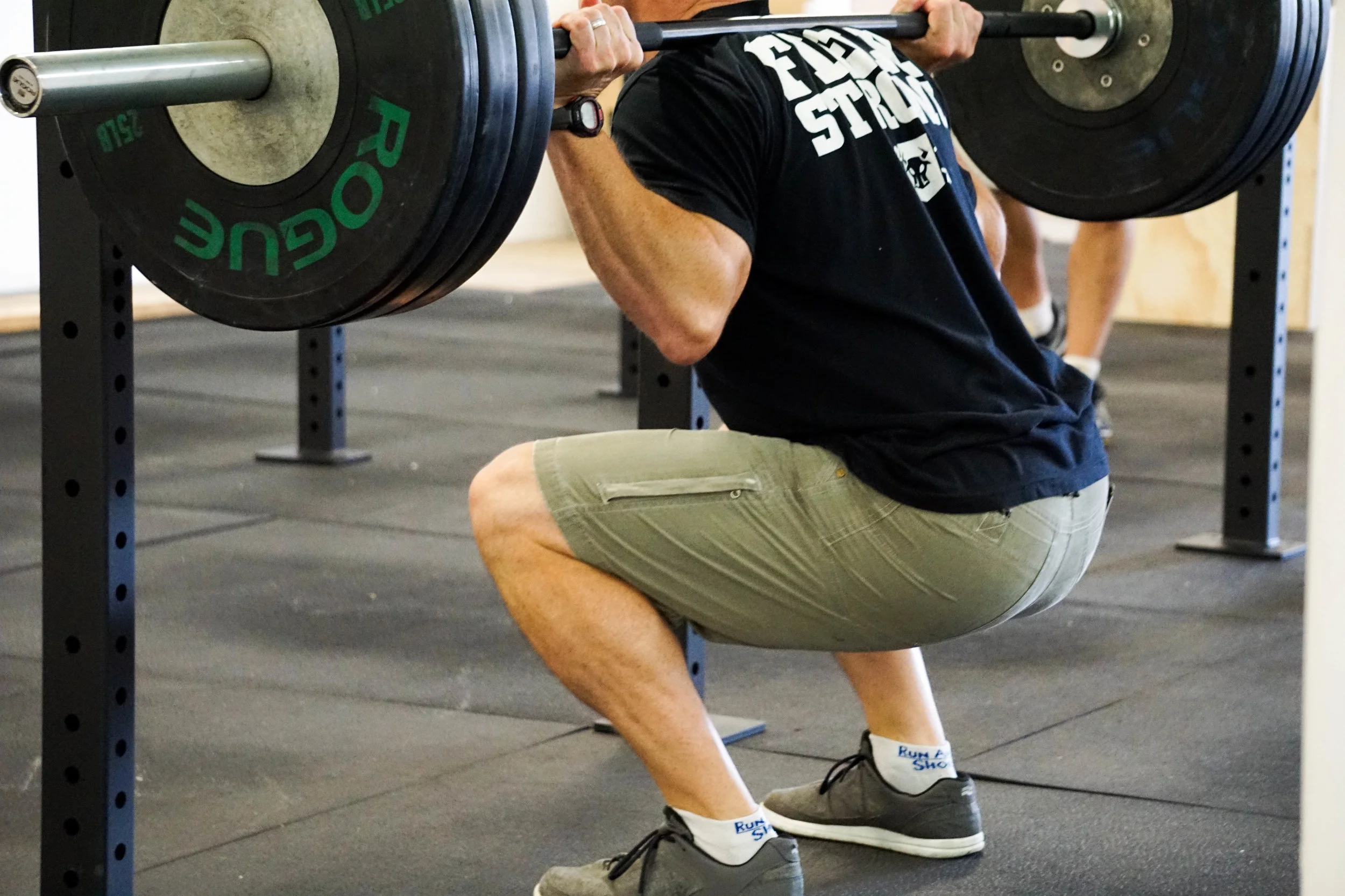
From College Athletes to Corporate Executives: Lessons from 100+ Elite Clients
After training hundreds of high performers, I've learned that "elite" isn't about your athletic resume or professional title. It's about how intentionally you prepare your body for the life you actually want to live.
From College Athletes to Corporate Executives: Lessons from 100+ Elite Clients
Over 27 years and 18,000+ training hours, I've had the privilege of working with an incredibly diverse group of high performers. From Division I athletes maintaining their edge post-competition to C-suite executives preparing their bodies for the demands of leadership, the patterns that separate those who thrive from those who merely survive have become crystal clear.
Here's what I've learned from helping elite clients build bodies that perform when it matters most.
The Performance Paradox
The college athlete walks in with impressive numbers—a 405-pound back squat, sub-5-minute mile, vertical jump that would make most people jealous. The executive arrives with a resume that commands respect and a schedule that would break most people.
Yet both often struggle with the same fundamental issue: their bodies can't handle what real life throws at them.
The athlete can squat heavy but can't move around without back pain. The executive can run a marathon but gets winded carrying groceries up stairs. They've optimized for specific performance metrics while neglecting the movement patterns that matter most in daily life.
This is the performance paradox—excelling in narrow domains while struggling with functional, real-world demands.
What Elite Performers Actually Need
After training everyone from former college rugby players to venture capital partners, I'm not here to dismiss the value of metrics or elite performance. Numbers matter. Tracking progress matters. The discipline that drives athletic excellence is invaluable.
But here's what I've learned: the transition from hyper-fit, elite performance activities to training for strength, capability, and longevity—that's the sweet spot most high performers are actually seeking.
The college athlete who ran a 4.4 forty doesn't need to abandon their competitive drive. They need to redirect it toward building a body that performs exceptionally well at 45, 55, 65. The executive who's never trained seriously doesn't need to apologize for starting late. They need to embrace that they're actually ahead of the curve—they get to build capability without first having to unlearn destructive training patterns.
Movement quality becomes paramount. Metrics remain important—but different metrics.
Instead of:
Maximum lift numbers → Can you move well under varying loads?
Fastest mile time → Can you sustain effort across different demands?
Aesthetic benchmarks → Does your body feel as capable as it looks?
Single-sport performance → Can you handle diverse physical challenges?
This isn't about lowering standards. It's about raising them to include what actually matters: a body that moves well, recovers efficiently, handles stress effectively, and keeps getting stronger across decades instead of peaking and declining.
The Seven Patterns That Matter
Whether I'm working with a former All-American athlete or a 50-year-old CEO discovering strength training for the first time, we come back to the same seven fundamental movement patterns:
Squat and Hinge - The foundation of getting low and picking things up
Lunge - Single-leg strength that translates to stairs, hills, and real-world stability
Step - Getting up and down from the ground, accessing different levels
Push and Pull - Upper body strength that shows up everywhere from opening doors to weekend projects
Rotation - The power pattern most conventional programs completely ignore
Carry - Moving loads, moving through space with purpose
Master these patterns with progressive intensity, and you build a body that's genuinely adventure-ready. These movements form the foundation for both performance AND longevity—the rare combination that keeps you strong and capable for life.
What College Athletes Teach Us
The most successful transitions I've seen from competitive athletics to "real life" happen when athletes shift their identity from "performer" to "capable human."
The football player who learns to value how their body feels moving through a day more than how much they can lift. The track athlete who discovers that training for life's demands is more fulfilling than chasing times they set a decade ago. The basketball player who finds new purpose in building strength that serves them in every domain.
These athletes already have discipline, work capacity, and body awareness. What they need is permission to train differently—to value capability over performance metrics.
What Executives Teach Us
Corporate leaders teach me the opposite lesson. They often arrive apologizing for their fitness level, as if their lack of a gym routine diminishes their worth.
Then they proceed to demonstrate incredible discipline, consistency, and strategic thinking once they understand what they're training FOR.
The best executive clients don't treat fitness as another box to check. They recognize their body as the vehicle for everything else they want to accomplish. They invest in movement the same way they invest in their professional development—strategically, consistently, with clear purpose.
They teach me that you don't need hours in the gym. You need intelligent programming, consistent execution, and a clear understanding of why you're doing what you're doing.
The Common Ground
Whether you're a former athlete or someone who's never set foot in a weight room, the path to a capable, resilient body follows the same principles:
Train movements, not muscles. Your body doesn't work in isolation—neither should your training.
Build capacity across domains. Strength without mobility is limited. Cardio without strength is incomplete. Power without control is dangerous.
Test yourself in the real world. Can you help a friend move? Hike a mountain with your family? Play with your kids? Say "yes" to an unexpected physical challenge? That's the test that matters.
Progress consistently, not dramatically. Small improvements compounded over time beat dramatic efforts followed by burnout.
Stay curious about what your body can do. The best clients—regardless of background—maintain a sense of exploration and possibility.
The Real Elite
After training hundreds of high performers, I've learned that "elite" isn't about your athletic resume or professional title. It's about how intentionally you prepare your body for the life you actually want to live.
The truly elite client is the one who shows up consistently, moves with purpose, challenges themselves appropriately, and builds a body that serves them across all domains of their life.
That's equally accessible whether you're a former Division I athlete or someone just beginning to take their physical capability seriously.
Your Next Move
The question isn't whether you have an athletic background or an impressive fitness resume. The question is: what do you need your body to do?
Once you answer that honestly, we can build the training program that gets you there—one that respects your time, honors your goals, and creates genuine capability that shows up when you need it most.
That's what 27 years and 18,000 training hours have taught me. And that's what I bring to every client who's ready to train with purpose.
Ready to build a body that performs in real life? Let's talk about what elite training looks like for you. Schedule your free consultation at MaxmeadFitness.com.

Adventure Prep Series: Ankle & Knee Stability for Uneven Terrain
You can be strong in the gym and still get wrecked on a trail.
Most ankle instability isn't a strength problem — it's a timing problem. The ankle can't react fast enough when you step on an edge or root. These four drills fix that.
Step 1: Forefoot Walk + Heel Walk
10 yds on the ball of the foot — spring tall, no collapse. 10 yds on the heel — toes up, anterior shin loaded, controlled pace. 2 passes. 90 seconds. Do this before every trail session.
Step 2: Active Foot Hold Stand on one foot.
Tripod contact: big toe mound, pinky mound, heel. Arch active — not gripped, not collapsed. Hold 30 sec. Progress to eyes closed and perturbation holds.
When the foot communicates clearly, everything upstream responds better.
Step 3: Multi-Direction Lunge Matrix
Forward → Reverse → Lateral → Rotational → Crossover One round each direction, both legs, bodyweight only. Terrain doesn't move in one direction — your prep shouldn't either.
Step 4: Step Downs Stand on a step.
Lower the free foot slowly (3 sec). Stop before contact. Return. Watch for knee cave, ankle collapse, or torso pitch — each one tells you exactly where your deficit lives.
15-Minute Pre-Trail Circuit:
Forefoot Walk + Heel Walk — 2 x 10 yds each
Active Foot Holds — 3 x 30 sec/side
Lunge Matrix — 1 round, all directions, both legs
Step Downs — 3 x 8/leg
The mountains don't care how much you bench. Train for the terrain.
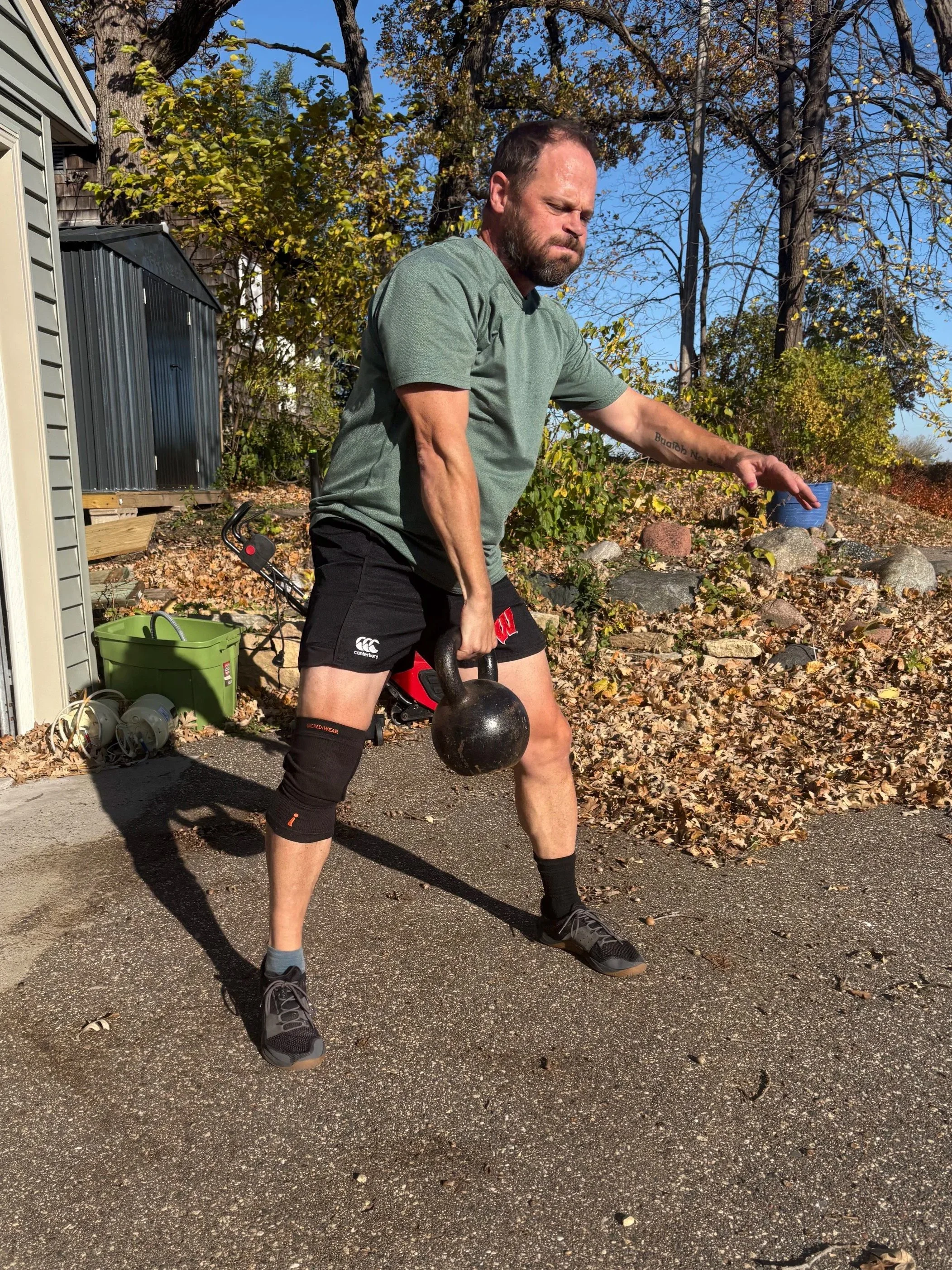
Getting Back to Your Best Primal Self: A Coach's Guide to Functional Fitness
The human body is designed for movement patterns hardwired into our DNA: squatting, lunging, pushing, pulling, rotating, and carrying. Yet most gyms train isolated muscles, creating bodies that look strong but move poorly. Discover the seven primal movement patterns that build real functional fitness—the kind that prepares you for hiking mountains, playing with grandchildren, and navigating daily life with confidence.
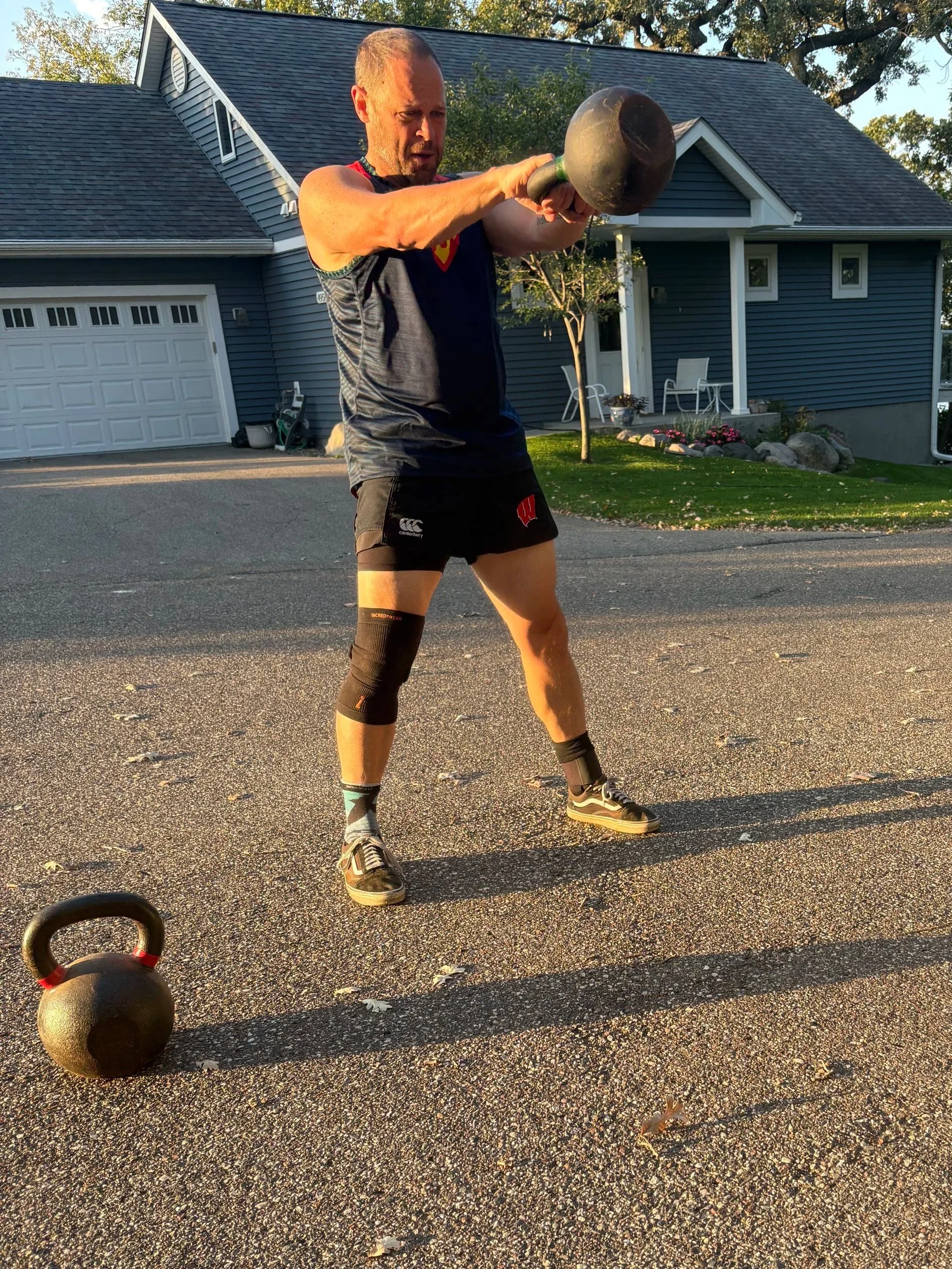
Coach Ryan McDowell performing kettlebell swings outdoors
After many years of working with everyone from weekend warriors to professional athletes, I've learned something crucial: the human body wasn't designed for the modern world we've created. We sit in cars and chairs for hours, stare at screens, and move in the same repetitive patterns day after day. Then we wonder why our backs hurt, our shoulders are tight, and we feel disconnected from our physical capabilities.
The answer isn't another fitness trend or the latest workout gadget. It's about getting back to something fundamental—your primal self.
What Is Primal Fitness?
When I talk about primal fitness, I'm referring to the movement patterns that are hardwired into our DNA. These are the movements our ancestors performed daily to survive: squatting to gather food, lunging to navigate uneven terrain, pushing and pulling to build shelter, carrying loads across distances, and moving quickly when necessary.
Your body is designed for these movement patterns. When you strip away the complexity of modern fitness and return to these fundamental movements, something remarkable happens. Your body remembers. It responds. It transforms.
This isn't about going back to living in caves or abandoning modern life. It's about recognizing that while our environment has changed dramatically over the past few hundred years, our bodies haven't. We still need the same variety of movement, the same physical challenges, and the same connection to our physical capabilities that kept our ancestors healthy and resilient.
The Problem with Conventional Fitness
Walk into most gyms and you'll see rows of machines designed to isolate individual muscles. Leg extensions. Hip abductor squeezes. Chest presses. The underlying philosophy is that if you strengthen each muscle independently, you'll build a strong, functional body.
But here's what I've observed over nearly three decades: this approach creates bodies that look strong but often move poorly. Why? Because life doesn't happen in isolated movements. When you pick up your child, you're not simply performing a biceps arm curl—you're coordinating dozens of muscles across multiple joints while maintaining balance. When you lift a box, twist to place it on a shelf, or sprint to catch a bus, your body works as an integrated system.
Primal fitness recognizes this reality. Instead of isolating muscles, we train movements. Instead of sitting on stable machines, we challenge your body to create its own stability. Instead of following a predetermined range of motion, we develop the mobility and control to move freely in all directions.
The Seven Primal Movement Patterns
Through my work with hundreds of clients and athletes, I've identified seven fundamental movement patterns that form the foundation of functional fitness:
1. Squat/Hinge
These lower body movements involving hip flexion and extension are perhaps the most fundamental human positions. The squat—whether you're sitting down and standing up, or picking something off a low shelf—is something children do naturally with perfect form. The hinge—the foundation of deadlifts and safely lifting objects—is how we're designed to bend forward while protecting our spine.
Together, these patterns build the posterior chain strength and hip mobility that form the foundation of pain-free movement. Most back pain stems from poor hinge mechanics—people rounding their lower backs instead of hinging at the hips. Master these patterns, and you've taken a major step toward a resilient, capable lower body.
One of my favorite ways to build squat strength is through medicine-ball front squats. Holding a load at your chest while squatting through an appropriate range of motion, the isometric hold of the upper body for 20-30 seconds combines with hip movement to create a very functional exercise. This builds tremendous stability and teaches your body to create tension in the most challenging position. You'll also benefit from eccentric squats, where you lower slowly over 3-5 seconds. These controlled negatives build strength throughout the entire range of motion and significantly reduce injury risk.
2. Lunge
The lunge is your single-leg strength and stability pattern. Life rarely happens on two feet with perfect symmetry—you're constantly stepping up stairs, navigating uneven ground, or stabilizing on one leg while reaching for something. Walking lunges, Bulgarian split squats, and single-leg movements expose and correct the imbalances that lead to injury. We need to be strong with our knees behind our hips in true hip extension.
I've watched countless clients discover they're significantly stronger on one side than the other. This asymmetry isn't just a training curiosity—it's an injury waiting to happen. Lunging patterns build the unilateral strength and stability that keeps you balanced and resilient.
For clients who struggle with balance or are rebuilding strength, I often program isometric split squats—holding the bottom position of a lunge for time, advancing to balancing only on the balls of your feet! This builds stability without the coordination challenge of movement and creates a solid foundation for more dynamic work.
3. Step
The fundamental stepping motion is crucial for all locomotion. Whether you're walking up stairs, stepping onto a curb, or hiking up a trail, your ability to efficiently step and transfer weight from one leg to another determines your movement capacity.
Step-ups, box steps, and stair climbing train this pattern, building the single-leg strength and coordination needed for navigating the three-dimensional world we live in. This isn't just about leg strength—it's about the neural coordination that allows smooth, efficient movement.
Eccentric step-downs—slowly lowering yourself from a box or step—are incredibly valuable for knee health and building control. The slow, controlled descent forces your muscles to work hard while lengthening, which builds resilience in tendons and connective tissue.
4. Push
Pushing movements include everything from pushing yourself up off the ground to pressing weight overhead to moving heavy furniture. Push-ups, bench presses, and overhead presses all train your body's ability to generate force away from your center.
In our modern world of pushing keyboards and car steering wheels, we need to maintain the upper body strength and shoulder stability that pushing movements develop. These exercises teach your body to transfer force from the ground through your core and into your arms—a skill that translates to nearly every physical task you'll encounter.
If you can't do a full push-up yet, eccentric push-ups are your secret weapon. Lower yourself slowly to the ground over 3-5 seconds, then reset to the top. You're much stronger in the lowering phase than the pushing phase, so this builds strength quickly. No pushups on your knees! Keep your trunk engaged while not overloading the hip flexors. Elevated pushups or even wall holds—an isometric push position against a wall—will build the shoulder stability needed for safe pressing.
5. Pull
Pulling movements—whether pulling yourself up, rowing weight toward your body, or pulling something down from overhead—are critically important in our push-dominant modern world. Pull-ups, rows, and face pulls build the posterior chain strength that keeps you upright and counteracts the rounded-shoulder posture most people develop from desk work and screen time.
We do far more pushing than pulling in daily life, which creates imbalances. Deliberate pulling work restores balance and builds the back strength that protects your spine and improves your posture. If you do nothing else, balance every push with a pull.
For pull-ups, the eccentric phase is where most people should start. Jump or step to the top position, then lower yourself as slowly as possible—aim for 5-10 seconds. This controlled negative builds the strength needed for a full pull-up faster than any other method. Isometric reclined rows—simply holding onto a bar or rings with a 90-degree elbow while leaning back—are an essential isometric that builds grip strength and shoulder health.
6. Rotation
Rotation is the often-neglected movement pattern that happens in the transverse plane—twisting your torso and pelvis. Life is full of rotational movements: swinging a golf club, reaching for something behind you in the car, playing catch with your kids, or simply turning to look over your shoulder.
Yet most traditional fitness programs ignore rotation entirely, creating bodies that are strong moving forward and backward but vulnerable when twisting. Medicine ball throws, wood chops, and rotational exercises build the cross-body core strength that actually matters for daily life and athletic performance. Training rotation safely and progressively is essential for spinal stability and injury prevention.
Isometric rotational holds—such as Pallof presses where you resist rotation by holding a band or cable at your chest—build incredible core strength. These anti-rotation exercises teach your body to create stability while forces try to twist you, which is exactly what happens in sports and daily activities.
7. Locomotion
This includes everything from loaded carries to walking, rucking, sprinting, and running. Humans are meant to move across distances and varied terrain, carrying what they need with them. When we limit ourselves to flat treadmills and predictable environments, we miss opportunities to challenge our cardiovascular system, build real-world strength, and develop the work capacity that defines functional fitness.
Farmer's carries, suitcase carries, rucking with a weighted pack, and varied running speeds all train your body to move efficiently under load. I've watched clients transform their functional capacity through simple loaded carries. Suddenly, carrying groceries isn't exhausting. Hauling luggage through airports becomes manageable. Moving furniture doesn't leave them sore for days.
Loaded carries are essentially isometric holds in motion—your muscles maintain constant tension while you walk. This builds endurance and stability in a way that traditional exercises can't match. For building foundational strength, try farmer's carry holds where you simply stand holding heavy weights for time before you walk.
Building Your Adventure-Ready Body
I often tell my clients that we're not training to look good in a mirror—we're training to be ready for adventure. Whether that adventure is hiking in the mountains, playing with grandchildren, tackling a home improvement project, or simply navigating daily life with energy and confidence, functional fitness prepares you for what matters.
Here's how to start:
Assess Your Current Movement
Before adding weight or intensity, understand how you currently move. Can you squat to full depth with your heels down? Can you hinge at the hips without rounding your back? Can you lunge with control and stability? Can you get up and down from the floor smoothly?
These assessments reveal where you need mobility work, where you need stability, and where you're ready to add challenge. Over my 18,000-plus hours of coaching, I've learned that starting from an honest assessment prevents injury and accelerates progress.
Prioritize Movement Quality Over Quantity
One perfect squat is worth more than ten sloppy ones. In primal fitness, we emphasize mastering fundamental patterns before adding load, speed, or complexity. This patience pays dividends—bodies that move well handle stress better, recover faster, and stay injury-free longer.
Incorporate Time Under Tension
Your muscles don't just need to move weight—they need to control it through all phases of movement. Concentric movement (when muscle shortens during the activity), eccentric training (slow, controlled lowering) and isometric holds (static positions under load) increase time under tension, which builds strength, stability, and resilience.
Train All Seven Patterns Regularly
A balanced program includes all seven primal movements. You might push and squat in one session, pull and lunge in another, and dedicate time to rotational work and loaded carries throughout the week. Or perform all of them in a total-body circuit. The key is variety—your body needs all these patterns to remain balanced and resilient.
Embrace Unilateral Training
Single-leg work through lunges and step patterns reveals imbalances you didn't know existed. Train one side at a time with lunges, single-leg deadlifts, and one-arm carries. Life rarely happens with perfect symmetry—your training shouldn't either.
Don't Neglect the Transverse Plane
Most people train exclusively in the sagittal plane (forward and backward) and maybe the frontal plane (side to side). The transverse plane—rotation—is where many injuries occur because it's undertrained. Make rotational work a regular part of your program, including both dynamic rotations and isometric anti-rotation exercises.
Progress Thoughtfully
Start with bodyweight movements. Master the pattern. Then add load gradually. A goblet squat before a barbell back squat. A box step before a heavy step-up. Push-ups before bench press. And always remember: eccentric training and isometric holds are powerful tools for building strength safely, especially when you're learning a new movement or working around an injury.
Respect the progression, and your body will reward you with steady, sustainable progress.
The Transformation I've Witnessed
I've watched this approach transform hundreds of lives. I've seen 50-year-olds move better than they did at 30. I've watched former athletes who thought their best physical years were behind them rediscover capabilities they'd forgotten. I've seen people eliminate chronic pain, gain confidence, and reclaim activities they thought they'd lost forever.
The common thread? They stopped chasing arbitrary fitness goals and started training for life. They stopped isolating muscles and started integrating movement. They stopped fighting against their body's natural design and started working with it.
One client recently told me, "For the first time in years, I feel like my body works the way it's supposed to. I'm not worried about throwing my back out or whether I can handle physical challenges. I just move, and it feels good."
That's the goal. Not six-pack abs or impressive bench press numbers—though those might come along the way. The goal is a body that feels capable, resilient, and ready for whatever life throws at it.
Your Primal Fitness Journey Starts Now
You don't need fancy equipment or a complicated program. Start with the basics:
Practice your squat and hinge with bodyweight, adding isometric holds at the bottom
Work on lunges and step-ups for single-leg strength, using slow eccentrics to build control
Do push-ups and find ways to pull your bodyweight—start with negatives if needed
Add rotational movements with a medicine ball or cable, including isometric anti-rotation work
Walk, carry things, and move with purpose
Listen to your body, but challenge it appropriately. Your primal self is still in there, waiting to be rediscovered. After 27 years of coaching, I can tell you with certainty: it's never too late to get back to your best physical self.
The human body is remarkable in its capacity to adapt and improve. Give it the movement variety it craves, the progressive challenge it needs, and the recovery it deserves, and you'll be amazed at what's possible.
Your ancestors built empires, crossed continents, and survived impossible challenges with nothing but their physical capabilities. That same potential lives in you. It's time to unlock it.
Ready to Start Your Primal Fitness Journey?
Let's talk about where you are now, where you want to go, and how primal movement training can get you there. I offer free 15-minute discovery calls to discuss your goals and answer your questions.
Or:
Pardon the Interruption
I started out January with 4 workouts per week. My plan was working well, for 11 days. Then a severe pain in my right arm shoulder and arm hit. Nerve pain leading to muscle spasms leading to loss of strength leading to numbness leading to nerve pain. So much for consistency, next move was containment and pain alleviation. Not much room for “fitness training”. But I kept positive and moved forward.
The most important thing that sprung from the last 3 weeks, was the adherance to my principle of Consisent Sifting and Winnowing by always being willing to put new things in the Hopper. When hospital visits and drugs weren’t moving the needle, I decided to try acupuncture. Finding someone to use needles around my spine was daunting. A good friend recommended Dr Chin. After learning of his decades of experience in Chinese medicine, I made an appointment.
After a long conversation about my activity and injury history (both are long!), followed by alot of explaination with anatomy diagrams (for those interested: Dr Netter’s work is available in Chinese!), Dr. Chin began a 3 hour session of acupuncture and massage. The results had some immediate results: pain reduction and the ability to sleep without meds. Then, on the subsequent days, the nerve pain has gone away. The feeling is returning. No more pain drugs needed. More work is required. However, the intervention worked and has allowed me to look forward again with optimism.
Today, a plan of action and activity: a meeting with a Physical therapist, upper body PT exercise plan , lower body strength work, walking (maybe a ruck), and lots of stretching. I may be back to consistent exercise, but positive thoughts and being open to something that moves me forward every day, has reinforced that being consistent starts with your basic self practices. Today, I re-start the process forward with some revised physical goals for the next 6 months.
Use your consisent belief in yourself, consistent action, consistent positive thoughts to move beyond the interruption when life deals you setback.

The price and the guide
Some days are joyous with feeling of adventure and overcoming adversity. You feel great about a cool experience, for me the physical ones are the most satisfying. Feeling free & easy of movement afterwards is the goal. Pain can be a consistent companion , it’s how much that is the question. Understanding how to thread the needle between soreness & injury is hard. Some days you pay the price for hubris. Today is one of those days.
Last week I talked about the joy of meeting and rolling with a world champion and the challenge & joy that came from the chance encounter. In addition to that grappling session, I had a hard Jiu-jitsu class the day before and, with the help of friends, took down a large oak tree on Saturday. Well, my body wasn’t up for that combined level of work. Now, a pinched nerve in my neck overrides the recovery of the rest of my muscles and will keep me out action for awhile.
As a performance coach to all levels of athletes, recreational 65+ year old nordic skiers to 20-something elite rugby players, High-school football players to CEOs flying around the country, I stress working their plan and the importance of recovery. Know thy self and how you work best. I failed to adhere to that maxim. Another setback reminds me yet again of the significance of coaching, the wisdom of experience, and why we seek those who provide it.
For myself, this means working with my chiropractor, Dr. Breanna Tivy (Thrive Chiropractic), to boost my recovery. Then, sitting down with my BJJ instructor, Prof. Gina Franssen (X2 BJJ), to map out the next year to hopefully avoid another episode like this one. And finally, some upper-back strength planning with my friend, Mark Schneider (The Retreat Strength Gym). Yes, coaches need coaches, too.
As we move through this month of resolutions, think on what your goals are for this year and why they are important. Reflect on who can mentor or guide you through the journey. Don’t ask for “help”; look for advice and direction from someone who can give prudent prespective. This guide can aid in avoiding some pitfalls; probably not all. Be proactive. The journey will be a bit smoother. And when you do make a mistake, that same sage mentor will be there to assist in moving you forward again.
Seek coaching. Find a mentor. Create teammates.
“One of the greatest values of mentors is the ability to see ahead what others cannot see and to help them navigate a course to their destination.” - John C. Maxwell

Many strong hands make light work.

This Saturday several friends (and their kids) came over to help take down a dead oak tree. It was kinda like an old fashioned barn-raising, just in reverse. The skills of a forester to start and some good Cuban pulled pork sandwiches to finish (recipe below) bookended at a great day. In the middle was a lot of work with strong hands. Having the strength and mobility to move heavy pieces of oak means lots of firewood and potentially some milled wood sections for future tables & benches. This ability is the benefit of work in the weight room and time spent making good friends. Both require time, dedication and being your authentic self. What will your strength practice & openness to friendship create? Get to work this year building muscle for cool tasks and the friends to enjoy with whom them.

Cuban Pulled Pork
Ingredients
2 tablespoons extra-virgin olive oil
1 tablespoon kosher salt
2 teaspoons ground cumin
2 teaspoons dried oregano
1 teaspoon ground black pepper
1/4 teaspoon crushed red pepper
3 to 4 cloves garlic, minced
Juice of 1 lime (2 tablespoons)
Juice of 1 orange (2 tablespoons)
3 to 3 1/2-pound boneless pork shoulder
Mix the oil, salt, cumin, oregano, black pepper, red pepper, garlic, lime juice and orange juice in a small bowl. Make slits in the pork with a paring knife and rub liberally all over with the oil mixture. Place the pork in a slow cooker and top with the remaining juices from the bowl. Cover and cook on low until tender, about 6-8 hours.
Remove from the slow cooker and let cool slightly. Shred the pork into thick chunks with 2 forks. Set the pork aside and keep warm in the cooking liquid.
Serve over rice or on sandwich buns
topping:
Yellow mustard, Swiss cheese, thick-sliced honey ham, thinly sliced dill pickle, or sweet pickle relish
Be open to giving
Cool experience: A teammate brought a friend to Jiu-Jitsu Friday. I invited the new white belt (w/cauliflower ears) to drill some escapes, helped him with some simple positions like others do for me. His local friend told me he able “to roll”. Then we went live! I learned alot about grip, hand battling, & evasion. Later in the session, I found out this humble guy was 2021 greco-roman wrestling 55kg world champion, Ken Matsui.
Along the the journey, we will meet interesting people. By opening up with giving of yourself, and being open to receiving, special moments happen that will enrich your soul and the path.
Arigato Ken! Good Luck on the road to LA 2028!

Prepare

Its a beautiful sunny day in April. We are usually beginning the commencement of the non-winter outdoor activities. But Old Man Winter has a few more tricks for us.
However, the snow will melt; the grass will green. And golf/softball/trail running/[insert spring activity] will start soon.
So, go prepare. Get to the gym and lift weights to build your power for hitting more doubles this year. Throw those med balls against the wall to develop your club head speed. Practice your arm swing & high knee drills to hone your running form.
Build a plan to help improve your performance.
Don't complain. Prepare. Spring is coming and your game will thank you.
-Ryan McDowell